
Best microSD Card for the Ricoh GR IV: Why I Chose a 128GB UHS-I U3/V30 Card
When I bought the Ricoh GR IV, one of the first accessories I had to buy was a new memory card.
This may sound like a small detail, but it is actually one of the most important accessories for the GR IV. A screen protector or strap can make the camera easier to use, but a memory card is where the photographs are stored. If the card is unreliable, the whole shooting experience becomes risky.
The GR IV also changed one important thing from the GR III series. The GR III used standard-size SD cards, but the GR IV uses microSD cards. Because of that, I could not simply reuse the SD cards I had been using with my GR III.
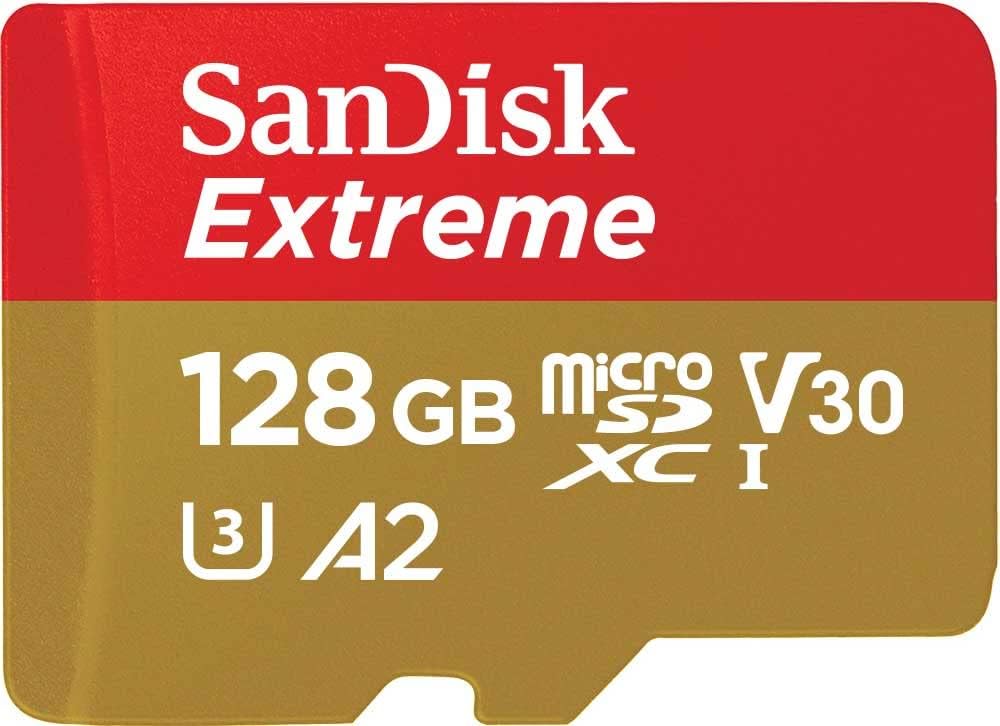
After checking the specifications and thinking about my own shooting style, I chose a SanDisk Extreme 128GB microSDXC card with UHS-I, U3, and V30 ratings.
The Short Answer
For most Ricoh GR IV users, I think a 128GB UHS-I U3/V30 microSD card is the most sensible choice.
That means:
- Capacity: 128GB
- Card type: microSDXC
- Bus standard: UHS-I
- Speed class: U3 / V30
- Brand: a reliable brand bought from a reputable seller
In my case, I chose SanDisk because I have used SanDisk cards for years and trust them for everyday photography.
There are cheaper microSD cards available, and there are also faster and more expensive cards. But for the GR IV, the best choice is not simply the cheapest card or the fastest card. The best choice is a reliable card that matches the camera’s actual specifications.
What Kind of Memory Card Does the Ricoh GR IV Use?
The Ricoh GR IV uses microSD cards. It supports microSD, microSDHC, and microSDXC cards, and it is compatible with the UHS-I standard.
This is the key point.
Because the GR IV supports UHS-I, you do not need to buy an expensive card just because it looks faster on paper. Some memory cards are designed for cameras that can take advantage of higher transfer speeds, but the GR IV is not that kind of camera. It is a compact, photo-focused street camera.
For the GR IV, the goal is not to buy the most extreme card possible. The goal is to choose a card that is reliable, fast enough, and not unnecessarily expensive.
Why I Chose 128GB
The GR IV has approximately 53GB of built-in memory. That is already much more useful than the small internal memory in older cameras.
For casual everyday shooting, the built-in memory alone may be enough. If I only take the GR IV out for a short walk, I can imagine using the camera without a memory card at all.
However, I still prefer using a microSD card.
The reason is simple: I do not want to think about storage while shooting.
When I am traveling, walking around Tokyo, or photographing an event, I do not want to stop and worry about how much internal memory is left. I often shoot RAW and JPEG together, and I sometimes take more photos than expected. A 128GB card gives me enough room without making the setup feel excessive.
For my use, 64GB feels a little too small, especially if I am shooting RAW and JPEG. 256GB is also fine, but it can feel more than necessary for everyday street photography.
That is why 128GB feels like the best balance. It is large enough for serious use, but still affordable.
Why UHS-I Is Enough
Memory card names can be confusing. You may see cards labeled UHS-I, UHS-II, U1, U3, V30, V60, V90, A1, A2, and so on.
For the Ricoh GR IV, the most important part is UHS-I.
The camera itself is compatible with the UHS-I standard. That means buying a much more expensive card designed for a faster interface is not necessary for this camera.
This is where many people overspend. They see a card with a higher number and assume it must be better. In some cameras, that may be true. But with the GR IV, the card should match the camera.
A good UHS-I card is the natural choice.
Why U3 and V30 Matter
The next important point is speed class.
U3 and V30 both indicate a minimum sustained write speed of 30MB/s. This is different from the large read-speed number often printed on the package.
For example, a card may advertise a high maximum read speed. That can be useful when transferring files to a computer, but it is not the only thing that matters while shooting. When the camera is saving images, write performance is more important.
For the GR IV, I do not need a professional video card. The GR IV is not a high-end 8K video camera. But I still want a card that can handle RAW files, JPEG files, and ordinary continuous shooting without becoming a weak point.
That is why U3/V30 feels like the right level. It gives enough performance without pushing the card into an unnecessarily expensive class.
Why I Avoid Very Cheap microSD Cards
A microSD card is not an exciting accessory. It does not change how the camera looks. It does not make the GR IV easier to hold. It does not feel like a fun purchase.
But it protects something more important: the photographs.
For that reason, I do not like buying the cheapest memory card available. Saving a small amount of money is not worth the risk of card errors, slow writing, or losing images.
I also prefer buying from a reputable seller. Memory cards are products where genuine supply matters. If the price looks too good to be true, I would rather avoid it.
For a camera like the GR IV, which is designed to be carried everywhere, reliability matters more than saving a few dollars.
Do You Need a microSD Card If the GR IV Has Internal Memory?
Technically, not always.
The GR IV’s built-in memory is one of the best practical improvements over older models. It means the camera is still usable even if you forget a memory card. That is a very nice safety feature.
But I do not see the internal memory as a replacement for a microSD card. I see it as a backup.
My preferred setup is simple:
- Use the microSD card as the main storage.
- Keep the internal memory as extra space.
- Format the card in the camera before using it.
- Back up photos regularly after shooting.
This gives me a cleaner workflow and more peace of mind.
Is 256GB Better Than 128GB?
A 256GB card is also a good choice, especially if you travel often or do not want to change cards for a long time.
However, for my own Ricoh GR IV setup, 128GB feels more balanced. It is enough for RAW and JPEG shooting, it is affordable, and it does not feel excessive for a compact street photography camera.
If the price difference is small, choosing 256GB is perfectly reasonable. But I do not think it is necessary for most everyday GR IV users.
What I Recommend
My recommendation
For the Ricoh GR IV, I would choose a reliable 128GB or 256GB microSDXC card with UHS-I and U3/V30 ratings.
The card I personally use is a SanDisk Extreme 128GB microSDXC card, UHS-I, U3, V30.
It matches the GR IV well, gives enough storage for RAW and JPEG shooting, and avoids the unnecessary cost of cards that are faster than the camera really needs.
Final Thoughts
The Ricoh GR IV is a camera made for everyday shooting. It is small, fast, and easy to carry. That is exactly why I want the memory card to be something I never have to worry about.
For me, the best microSD card for the GR IV is not the cheapest card. It is also not the most expensive card. It is the card that fits the camera’s specifications and gives me enough reliability for daily street photography.
That is why I chose a 128GB UHS-I U3/V30 microSD card.
It is a small accessory, but it is one of the most important parts of my GR IV setup.
Related Article
The Ricoh GR IV Accessories I Bought and Actually Use
This article contains affiliate links. As an Amazon Associate I earn from qualifying purchases.